My Story

Seven Years of Building Bridges

From translating folktales in Seoul to building libraries in Cambodia and software for migrant workers in Korea. The long version, year by year.

2019

Where It Started: AsianHub

It started with a folktale. I was volunteering with AsianHub in Seoul, an organization serving multicultural families who had immigrated to Korea from across Asia. My job sounded small: translate manuscripts of Korean national folktales and record audio recitations so children in these families could hear them in a language they understood.

But sitting with those families changed the way I saw my own city. I watched mothers who could navigate three languages struggle to help their children with a single page of Korean homework. I watched children fluent in the culture of their classrooms lose the ability to talk with their own grandparents. Language was not just a skill; it was the thing deciding who got to belong.

That year left me with the question that has driven everything since: who gets to have their story told, and in whose words?
2021

Building Something of My Own

Two years of volunteering taught me where the gaps were. In 2021, at fifteen, I decided to stop waiting for someone else to fill them.

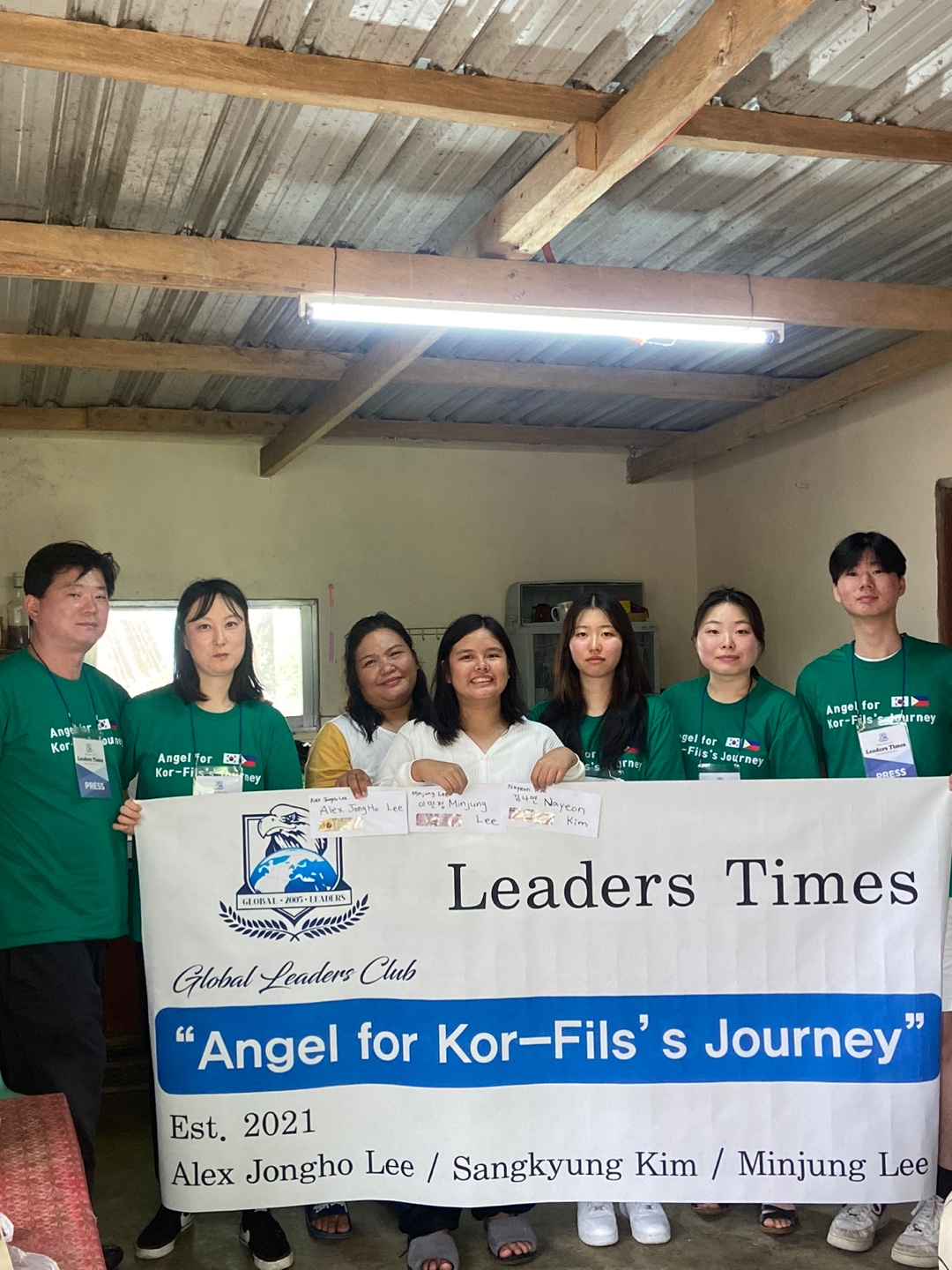
With friends, I co-founded Angels for the Journey, a youth-driven NPO supporting children and families in the Philippines, Cambodia, and Laos. The model was deliberately unglamorous: tuition assistance, school supplies, uniforms, exam fees, delivered directly and consistently. Money is boring. A child staying in school is not.

The same year, I joined LeadersTimes as a journalist, writing about contemporary global issues in English for Korean audiences. Reporting and organizing turned out to be the same muscle: both are about noticing what everyone walks past, and refusing to walk past it.

Visiting a family we support in the Philippines, one of the households Angels for the Journey has accompanied since 2021.
2023

Back to School: Seoul National University

I enrolled at Seoul National University to study English Language and Literature. It might seem like a detour from fieldwork, but it was the opposite: I wanted to understand rigorously what I had been seeing intuitively, how language shapes power, who it includes, and who it quietly locks out.

University also gave me something the work alone could not: a community of people who pushed me to think harder, write better, and question whether good intentions were actually producing good outcomes.

2024

A Year of Showing Up

2024 was less about founding things and more about being present, week after week.

I translated political corruption coverage for MediaWatchTV so Korean stories could reach international audiences, organizing interview scripts for outlets like The Postil Magazine and The Diplomat. I traveled with LeadersTimes to the UN Memorial Cemetery in Busan, where I covered the flower wreath ceremony, interviewed Rear Admiral Neil Koprowski, and designed 'Freedom is Not Free' t-shirts to fundraise for the families of fallen UN soldiers.

And every week, I showed up at the Mission Center for Migrants in Daegu: making food, organizing Lunar New Year and Chuseok celebrations, sitting with people who had crossed oceans for work and ended up with very little support on the other side. Those evenings taught me more about labor, dignity, and language than any classroom.

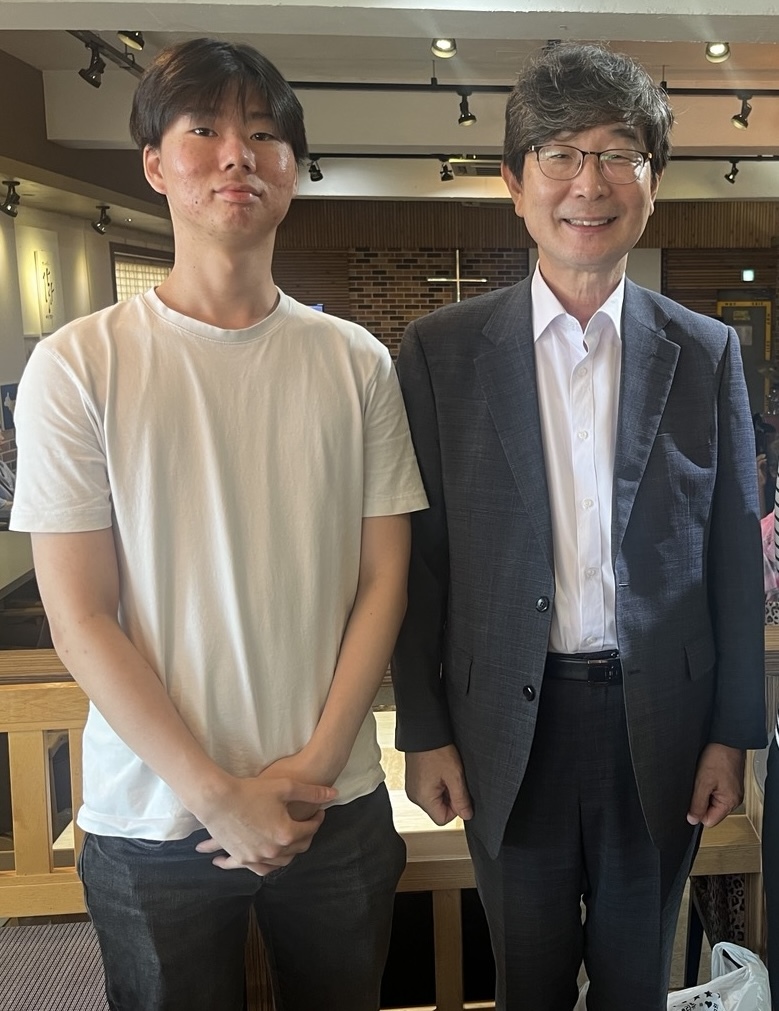
A weekly gathering at the Mission Center for Migrants in Daegu, alongside its founder, Pastor Ko.
2025

Cambodia: Lumen Education Program

I went to Cambodia because I heard about children who had no books in their own language and no library within reach. I stayed to co-write them.

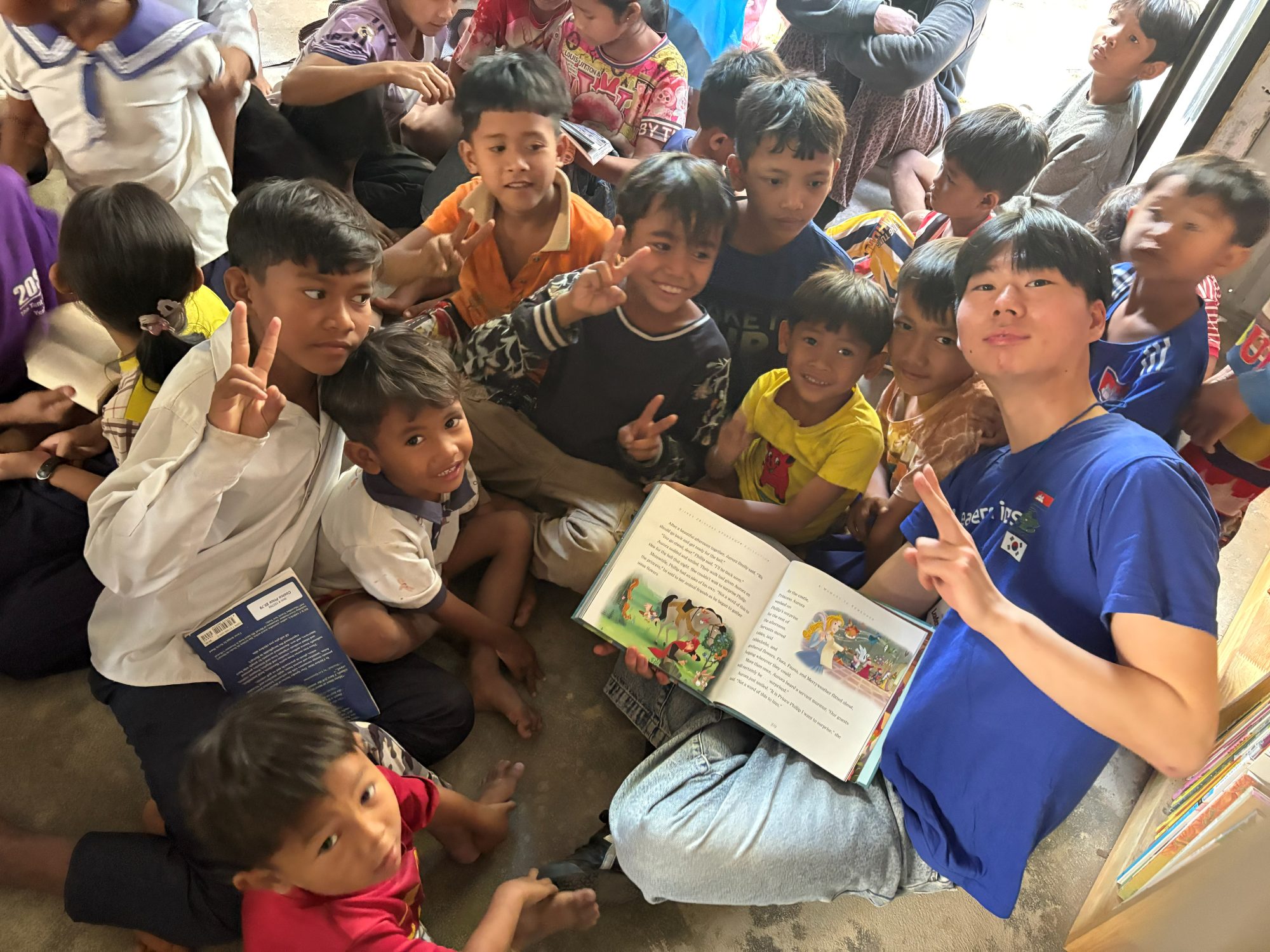
Lumen Education Program became the most concrete thing I have ever built. Working with Cambodian youth, local educators, and student volunteers abroad, we published multilingual children's books rooted in Cambodian oral tradition, in Khmer, English, and Korean. We established three children's libraries in local churches in Siem Reap, in partnership with Angels for the Journey, and donated over 2,500 books, including a collection to the National Library of Cambodia.

It was also the most humbling. The stories were always there, being told aloud in kitchens and courtyards for generations. We didn't bring stories to Cambodia. We just helped print what was already hers.

Reading together with children at one of the three Lumen libraries we built in Siem Reap.
2026

Jurio: The Same Problem, a Different Tool

Cambodia taught me that the most dangerous kind of exclusion is the kind that looks invisible. When workers can't read a contract, or don't know they have rights, or can't ask for help because no one speaks their language, the law protecting them might as well not exist.

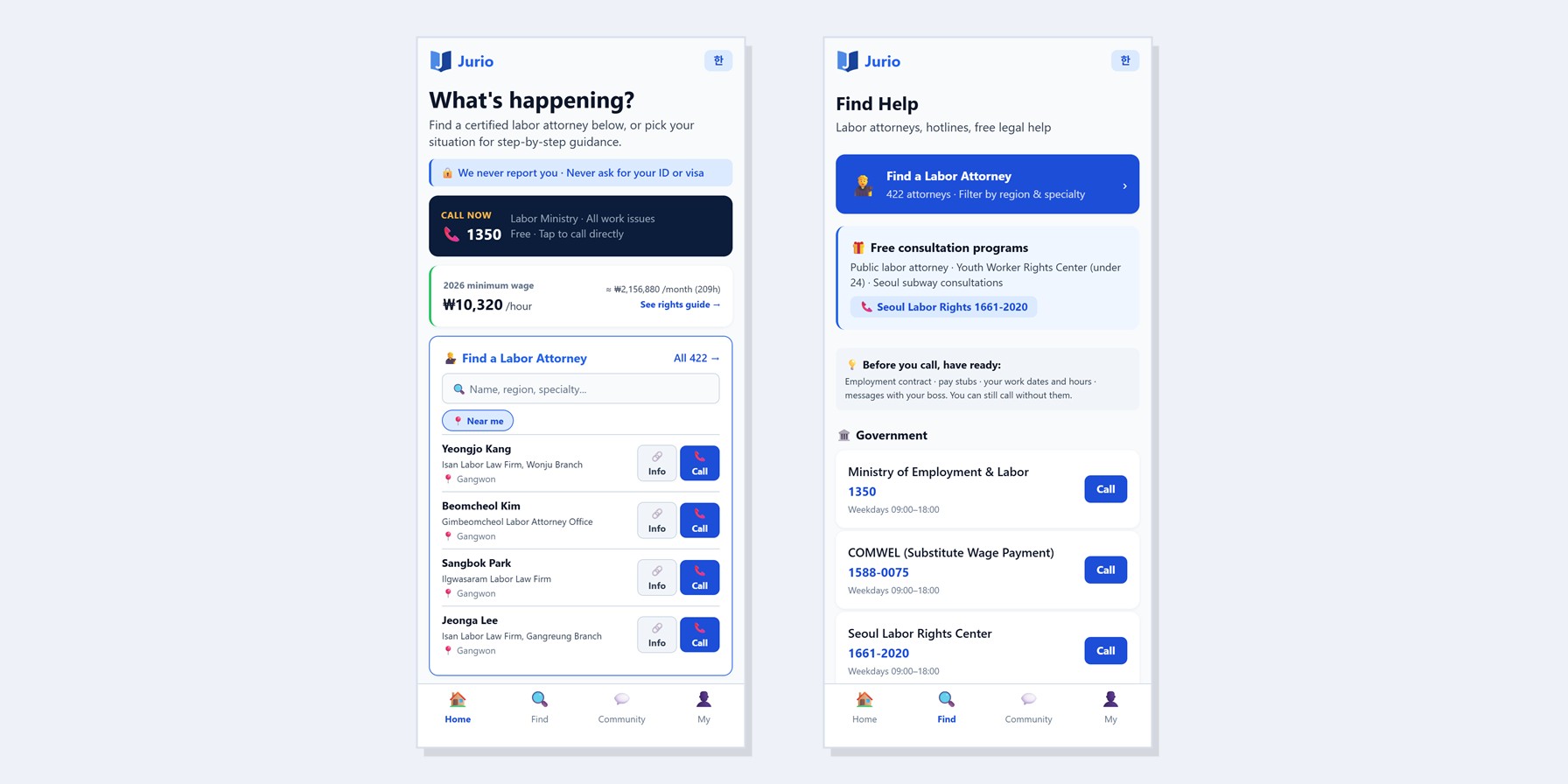
In April 2026, I started building Jurio: a bilingual Korean/English web app that puts labor rights information directly into the hands of migrant and industrial workers in Korea. Plain language instead of legal jargon. A phone screen instead of a government office. The same mission I found at AsianHub in 2019, in the first medium that can be in ten thousand pockets at once.

Seven years in, the thread is unchanged: language is power, and communities deserve access to what is already theirs. Everything I build next will pull on that same thread.

Jurio, in English and Korean: an emergency hotline, the current minimum wage, a directory of certified labor attorneys, and plain-language rights guides, built for the phone in a worker's pocket.

Where the Work Lives Now

Each chapter above became something you can visit, read, or use today.